How Valve announced Counter-Strike: Global Offensive on Aug. 12, 2011
Valve announced Counter-Strike: Global Offensive on Aug. 12, 2011. Here is what the company said, what early players reported and how it was framed.
Watch
From other channels; the video plays on YouTube after you click, and YouTube's privacy policy applies.
Valve announced Counter-Strike: Global Offensive (CS:GO) on Aug. 12, 2011, with a release targeted for early 2012 on PC, Mac, Xbox Live Arcade and PlayStation Network. The news followed a night and morning of rumors and leaks, some from people who had visited Valve’s offices. Within days, community figures were describing what they had played.
Rumors ahead of the announcement
Engadget reported that evidence of a new Counter-Strike project had been piling up before Valve said anything. The anti-cheat community ESEA revealed the game’s name on its Facebook page, Engadget wrote, after posting a photo of ESEA co-founder Craig Levine at Valve’s offices.
Valve designer Jess Cliffe confirmed the title on the Steam forums, according to Engadget. He corrected a poster who had called the game “Global Operation.” Electronic Sports League manager Bastian Veiser wrote on Twitter that he had spent the whole day playing the new game at Valve’s headquarters, Engadget said.
Engadget updated its post once the press release arrived. PC Gamer called it a quick confirmation of the rumors.
What Valve announced
Valve posted the announcement on Steam News on Aug. 12, 2011. Copies of the press release published by outlets carry a dateline of Aug. 13, 2011. The Steam News post itself is dated Aug. 12.
The release said CS:GO was targeted for release through PlayStation Network, Xbox Live Arcade and Steam for PC and Mac in early 2012. Valve tied the timing to the series’ history. The game would expand on the team-based gameplay Counter-Strike pioneered “exactly 12 years ago,” the release said, referring to CS beta 1 in August 1999.
The feature list was short:
- New maps, characters and weapons.
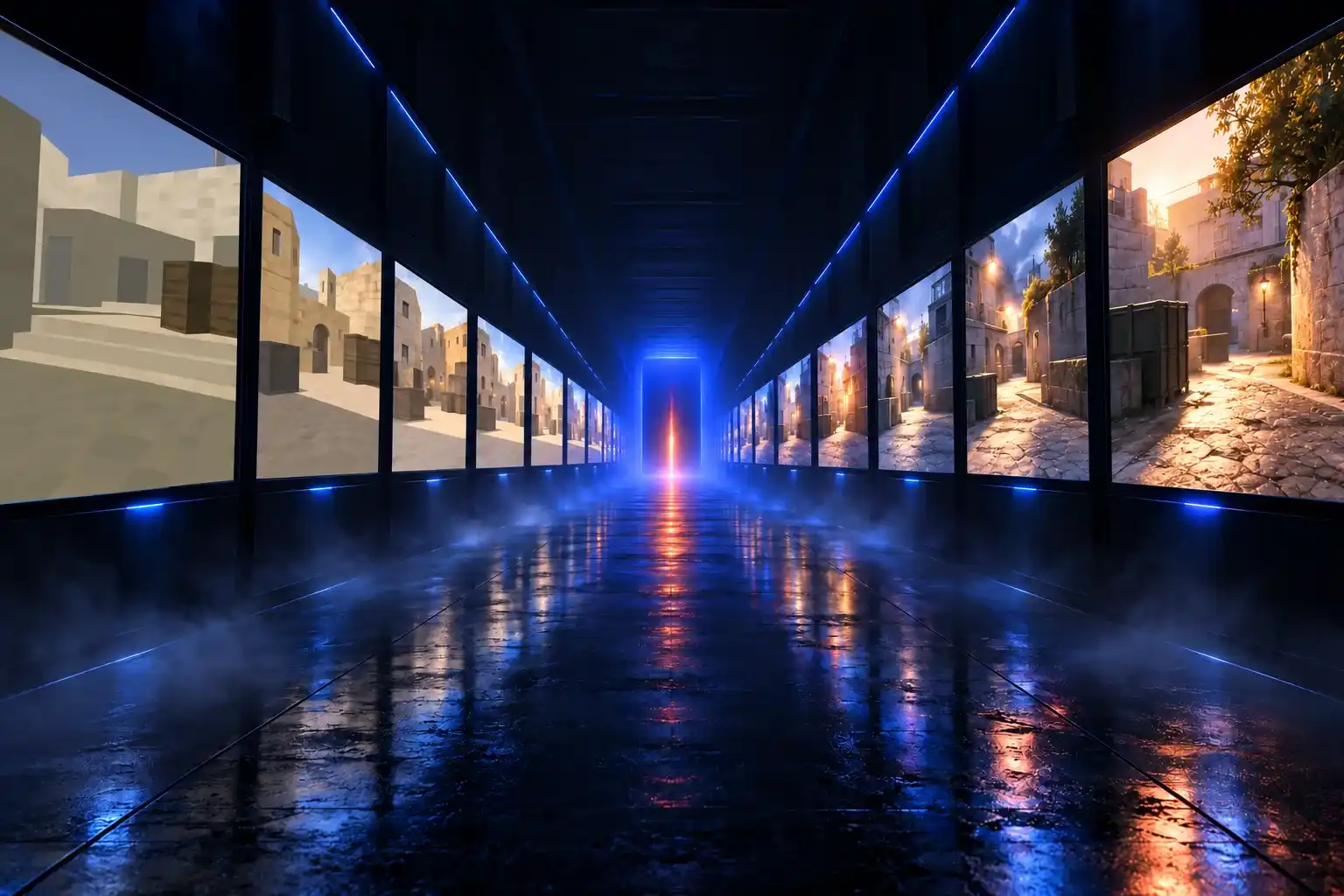
- Updated versions of classic Counter-Strike content, with de_dust given as an example.
- New gameplay modes, matchmaking, leaderboards “and more.”
Valve said it was developing the game in cooperation with Seattle-based Hidden Path Entertainment. It would be playable at PAX Prime and at a second event. Valve’s own post names that event as Eurogamer Expo 2011, and its Steam store page says Eurogamer Expo. The copies of the release published by PC Gamer, Engadget and this site’s own post instead say London Games Festival.
Doug Lombardi of Valve was quoted in the release. “Counter-Strike took the gaming industry by surprise when the unlikely MOD became the most played online PC action game in the world almost immediately after its release in August 1999,” he said. Lombardi also said the series had continued to headline competitive tournaments and had sold over 25 million units worldwide across the franchise.
First reactions
PC Gamer’s first report said that no screenshots had been released. Judging by Valve’s wording, the site wrote, the game looked more like an “anniversary edition” of Counter-Strike: Source than a full sequel. It also wrote that Hidden Path had helped Valve update Counter-Strike: Source with achievements a year earlier.
A fan post on counterstrikego.com the same day said Valve had mailed the site the press release that morning. It also gave the release window as “early 2011,” a mistake a reader pointed out in the comments. Valve’s text says early 2012.
What Levine saw
Valve had flown many top members of the Counter-Strike community out to see the game. PC Gamer summarized Levine’s write-up for the ESEA site on Aug. 15. Everything below comes from his account as PC Gamer relayed it. Valve’s announcement did not confirm these details.
- MapsDust, Dust II, Inferno, Nuke and Train were included. Dust had been “overhauled to be competitively played.”
- ModesThe game would have traditional de_ and cs_ map types, and no new game modes. That differs from Valve’s release, which promised new gameplay modes. It would also have “casual and competitive” modes, built-in leaderboards and dedicated server support.
- WeaponsNew weapons included a heavy machine gun, a rifle, new pistols and a new shotgun. Valve was experimenting with an $850 molotov cocktail meant to block rushes, and with decoy grenades that emit gunfire sounds when thrown. PC Gamer’s first post also mentioned that the AK had become more expensive.
- BalanceValve wanted players to try weapons beyond the AWP, M4, AK and Desert Eagle. Levine said it had taken “creative liberties” with the mid-range effectiveness of submachine guns, and that shotguns would have “unique close range use.”
- TechnologyThe game was built on the latest version of the Source engine.
Levine said player movement felt very different from Counter-Strike: Source and Counter-Strike 1.6. According to PC Gamer, it did not “grossly offend” the top players testing. Levine was also “surprised at how visually polished the game was.” He stressed that the build was pre-beta and that Valve was collecting plenty of feedback from the testers.
Newell at Gamescom
On Aug. 19, German site PCGames.de spoke to Valve’s Gabe Newell at Gamescom in Cologne, Germany. This site’s fan post published a transcript the same day, and the quotes below come from it.
Asked why the game was not called Counter-Strike 2, Newell said: “Because it’s not Counter-Strike 2.” He gave the game two goals. One was “a significant update to the PC players who have been playing CS 1.6 or CS: Source.” The other was to give a new generation of console players a way to play Counter-Strike, since Valve had not made a console Counter-Strike since an Xbox version in 2003.
Newell compared the changes to the step from Counter-Strike 1.6 to Counter-Strike: Source, with new maps and upgraded engine and graphics technology. Valve was bringing features from Team Fortress 2 and from work on Dota 2 into the Counter-Strike codebase, he said. “Nobody wants a compromise or de-featured multiplayer experience,” he said when asked whether the console versions would be toned down.
On cross-platform play between PC and consoles, he said: “It’s certainly our goal. We never want to create these islands of players.” Valve had to be sensitive to control differences, he added, and platform holders sometimes make such play hard for contractual or other reasons.
What came next
At the time of the announcement, Valve was targeting early 2012 for release. PC Gamer wrote that a closed beta was planned for the autumn and that the game was due “sometime in 2012, Valve time.” Engadget wrote that the game would be playable later in August at PAX Prime.
Sources
- Valve (Steam News), Valve Announces Counter-Strike: Global Offensive (CS: GO) (Aug. 12, 2011)
- Valve (archived), Counter-Strike: Global Offensive on Steam (captured Aug. 15, 2011)
- PC Gamer, Valve announces Counter-Strike: Global Offensive, playable at PAX (Aug. 12, 2011)
- Engadget (Joystiq), Counter-Strike: Global Offensive coming to XBLA, PSN and Steam early 2012 (Aug. 12, 2011)
- PC Gamer, Counter-Strike: Global Offensive pro hands-on reveals new Dust, molotov cocktails, more guns (Aug. 15, 2011)
- CounterStrikeGO (archived), Counter-Strike: Global Offensive Officially Announced (Aug. 12, 2011)
- CounterStrikeGO (archived), Gabe Newell Talks CS:GO, Says Crossplatform Support Likely (Aug. 19, 2011)
- bit-tech, Counter-Strike: Global Offensive gets cross-platform multiplayer (Aug. 26, 2011)